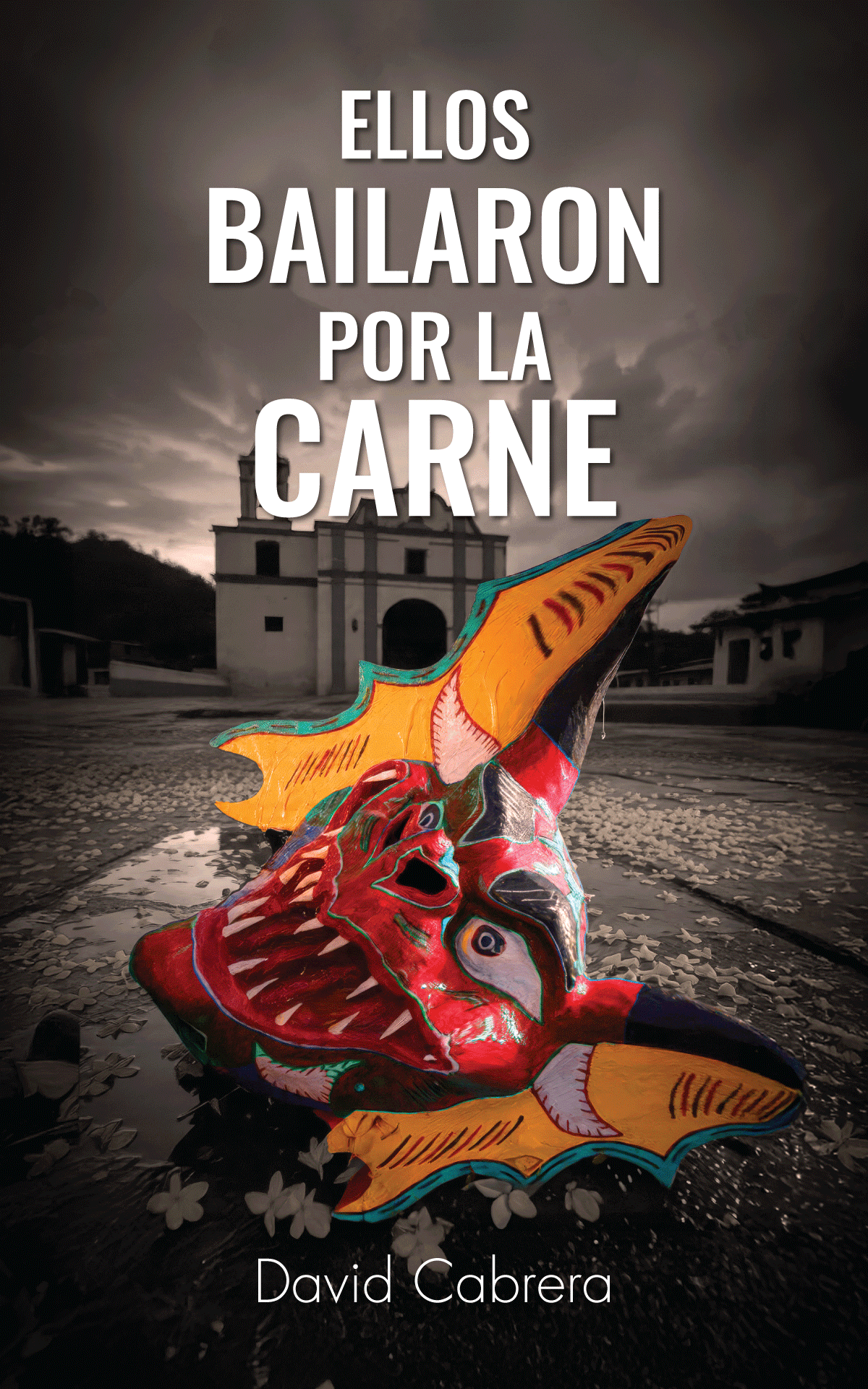
In a world that offers us new gods, a man returns home to discover that the sacred was never in the sky.
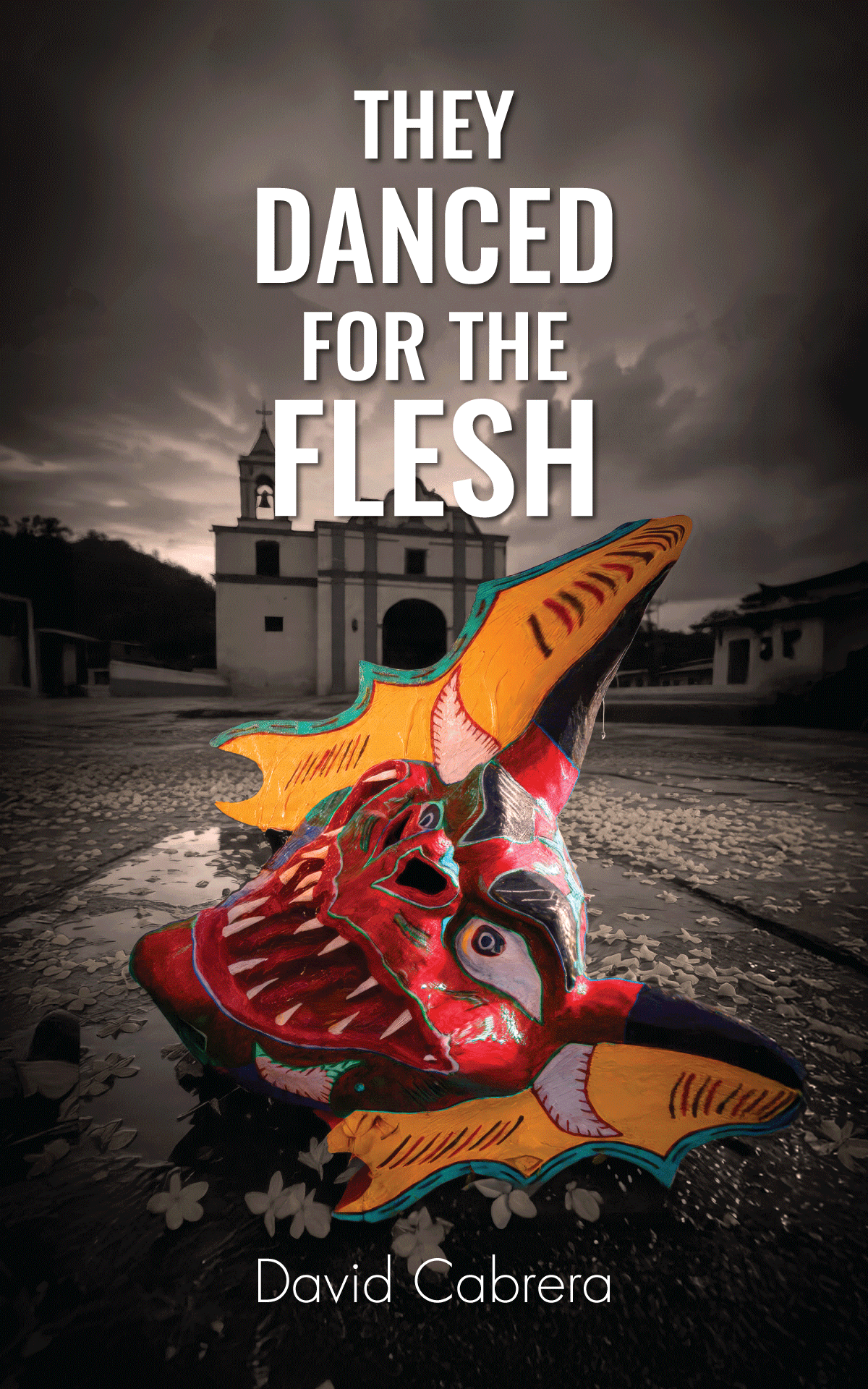
Tomás, a Venezuelan priest living in Montreal, is losing his faith. When news reaches him that Isaías — the old priest who once took his vow — has died, he travels back to Ocao, the coastal village he hasn't seen in more than twenty years. He finds the cacao rotting on the branches, the young gone, and a beautiful being called Zahiel at the center of every life that remains. And he finds Amalia, the woman he never stopped loving.
When God stopped being the superhuman source of meaning for our lives, we did not make the effort to give meaning to our lives on our own; we simply sought new superhuman sources of meaning. In this way, we kept our religious fervor…
Occasional letters from the writing desk — new work, readings, and the stories behind the stories.
I write about a man's search for himself in a world that peddles endless ideas, ideologies, and religions — each one seducing him to behave one way or another. Sometimes the body carries more of the divine than any act of devotion.
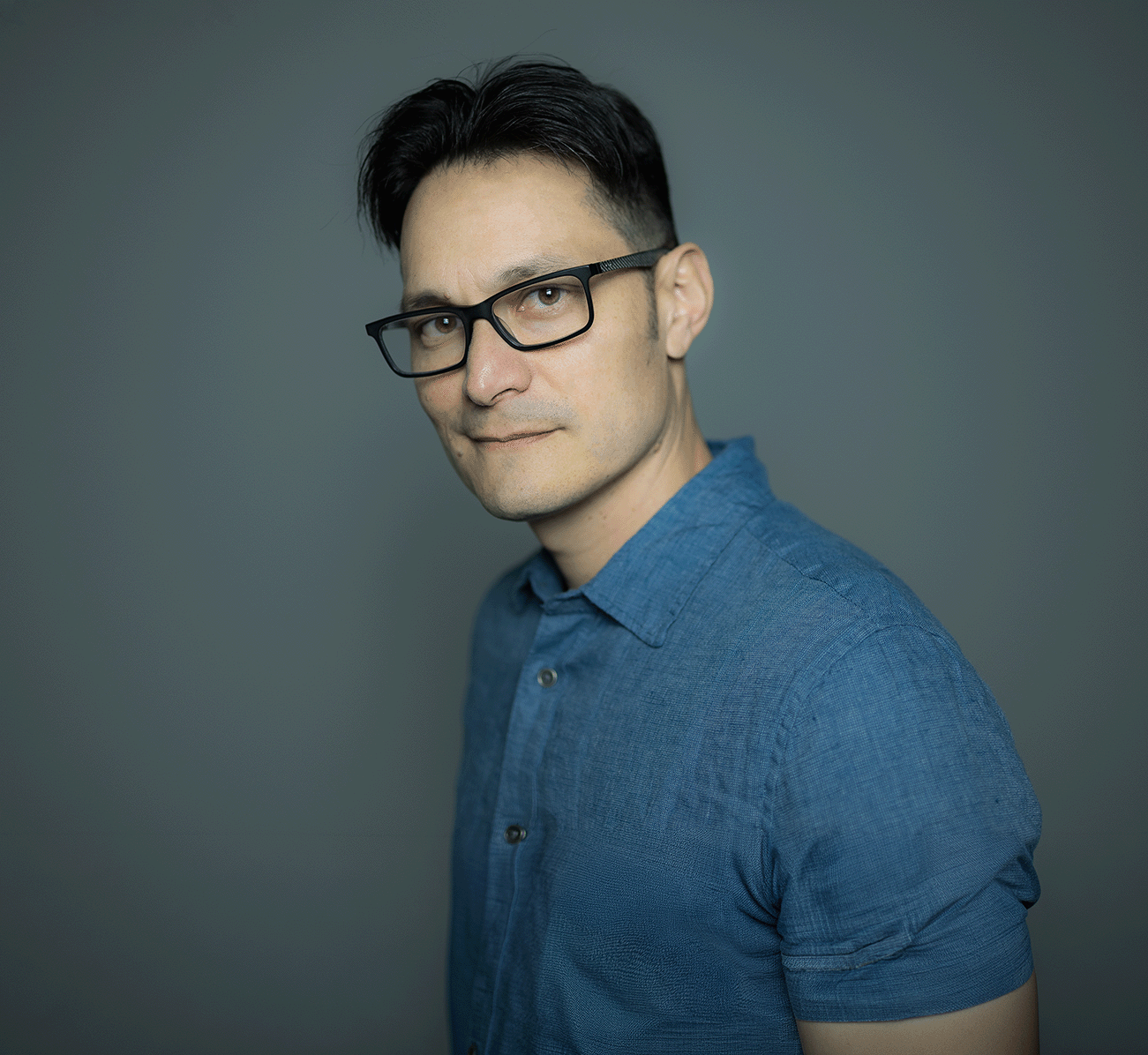
David Cabrera is a Venezuelan filmmaker and writer based in Canada. Before turning to fiction he spent years writing and directing films — including the short The Whistler, drawn from the oral folklore of the Venezuelan llanos. They Danced for the Flesh is his debut novel: a story of memory, devotion, and the violence of beautiful things.
Would you like to contact me for an author talk or event?

A literary novel about one man's search for meaning in a world crowded with ideas, ideologies, and beings that demand his surrender — and about the quiet discovery that the body, and the people we touch, may hold more of the sacred than anything we kneel before.
In a world transformed by the arrival of luminous beings who can bend human will to their own, belief has stopped being a choice. Cities fill with new devotions. Airports close under the songs of strangers. Every street corner offers a different deity, and the difference between faith and surrender grows smaller by the day.
Tomás, a Venezuelan priest living in Montreal, has spent years watching his faith erode while refusing, in silence, to bend to the new gods. When news arrives that Isaías — the old priest who once took his vow — has died, he returns to the place he swore never to revisit: Ocao, a coastal village cradled between the Caribbean and the cloud forest. The Ocao he finds is a shadow of the one he left. Its young have scattered. The cacao rots on the branches. The fishing nets come up empty. What remains is a community of the elderly, moving through the preparations for the Corpus Christi celebration with a fervor that feels too perfect to be their own.
At the center of every life in Ocao stands Zahiel — radiant, serene, implacable — placing yellow flowers behind the ears of the few girls who remain. And at the edge of Tomás's old life stands Amalia, the woman he loved before a priesthood, before exile, before the first angel was ever seen. Between them waits a photograph he should not have found: Isaías, his sister Elena, and a third figure whose contours refuse to hold still.
They Danced for the Flesh is a novel about the price of surrender and the stubborn dignity of the body. A novel of drums and rituals, of cacao and saltwater, of the Diablos Danzantes dancing their way toward a church whose doors have been sealed from inside. It is a book that asks what forgiveness becomes when there is no longer a God to grant it — and answers, very quietly, that the only absolution we were ever going to find was already inside the people we love.
“He had spent most of his adult life convinced that a divine order existed — one that guaranteed absolution and meaning. Now, having known the sublime of the flesh, his perspective had changed.”
“This grief, this love, this terrible and beautiful pain — this was what Zahiel had wanted so desperately and could never possess. This was what it meant to be of flesh.”
Watch the official book trailer on YouTube.
I write about a man's search for himself in a world that peddles endless ideas, ideologies, and religions — each one seducing him to behave one way or another. Sometimes the body carries more of the divine than any act of devotion.
David Cabrera was born in Caracas, Venezuela, where he worked for several years in the film industry as a writer and director. He wrote and directed the short film The Whistler — a work rooted in the oral folklore of the Venezuelan llanos, where a figure emerges from the silence of the countryside to punish the sins of men.
After moving to Canada, he continued his work in visual storytelling, leading the audiovisual department of an international NGO. Through that work he came to understand something that would shape all his writing: the way belief organizes entire communities, and the way devotion, when it runs deeper than language, can become indistinguishable from surrender.
They Danced for the Flesh is his debut novel. Written between Montreal and Ocao — a fictional coastal village stitched together from the cacao plantations, the fishermen, and the Diablos Danzantes of the Venezuelan coast — it marks his transition from filmmaking to literature, and brings his cinematic eye to a story of memory, guilt, and the dangerous beauty of things that ask for our worship.
Available for interviews, readings, book club visits, and festival appearances — in English and Spanish.
Whether you're a reader, journalist, podcast host, or fellow writer — I welcome all messages.
If They Danced for the Flesh moved you — or unsettled you, or asked you questions you're still sitting with — I'd be honored to hear it.
As an independent author, an honest review is the quiet form of generosity that keeps this work alive. A few sentences — warm, skeptical, whatever you truly felt — help the book find its way to other readers, and shape the stories I write next.
Honest reviews help the book reach the readers it was written for — the ones asking the same quiet questions. Even a few sentences are a gift.
Begin the novel the way Tomás begins his descent: at a pulpit in Montreal, holding a broken rosary, losing his congregation to a creature that has walked in out of the spring evening. The first chapter — the moment his faith breaks, and a message arrives from a woman he has not spoken to in twenty years — delivered straight to your inbox.